Doha Process Working Group Meeting: Talks on Drugs Held in Kabul
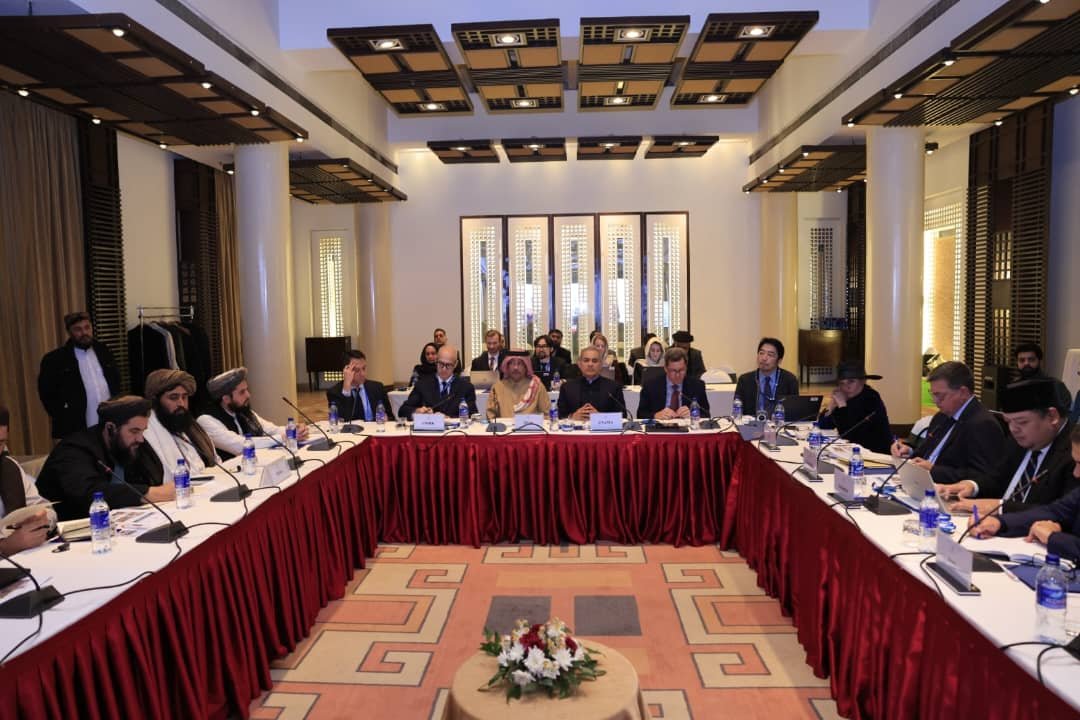
The fourth meeting of the Counter-Narcotics Working Group under the Doha Process was held in Kabul on Wednesday, bringing together Taliban officials, United Nations representatives, foreign diplomats, and technical experts. The meeting focused on the current state of drug production and trafficking in Afghanistan, as well as possible avenues for practical cooperation in addressing the issue.
According to information released by the Taliban’s Ministry of Foreign Affairs, the meeting took place at the Grand Kabul Hotel and was hosted by the United Nations Assistance Mission in Afghanistan (UNAMA). Representatives from the Taliban-run ministries of foreign affairs, interior, agriculture, and public health attended the meeting, alongside delegates from international organizations, the European Union, the Organization of Islamic Cooperation, and several countries, both in person and online.
In a statement, the Taliban’s Ministry of Foreign Affairs said that the enforcement of a decree by the group’s leader banning poppy cultivation has led to a significant reduction in opium production across Afghanistan. The ministry stated that measures such as enforcing the ban, seeking alternative livelihoods for farmers, and expanding treatment and rehabilitation programs for drug users are part of the Taliban’s stated approach to counter-narcotics efforts.
The statement also warned that the expansion of synthetic drugs, as well as the inflow of precursor chemicals from outside Afghanistan, could pose an increasing threat to the country, the region, and beyond if not met with a coordinated response.
According to the Taliban, some representatives of the United Nations and international organizations participating in the meeting described the sharp decline in poppy cultivation as an unprecedented development in Afghanistan. Based on the same account, several participants emphasized continued support for counter-narcotics initiatives and underlined the need for coordination through the Doha Process and bilateral engagements.
At the same time, participants reportedly stressed that sustaining current gains would be difficult without providing sustainable alternative livelihoods for farmers and expanding treatment and rehabilitation programs for people affected by drug use.
UNAMA had not issued an independent statement on the meeting at the time of publication.
Launched in 2023 at the initiative of the United Nations, the Doha Process serves as a structured framework for dialogue between the international community and the Taliban authorities. In the absence of formal international recognition of the Taliban administration, the process has focused on practical cooperation in areas such as humanitarian assistance, economic issues, and counter-narcotics.
The Counter-Narcotics Working Group was established in late 2024 within the framework of the Doha Process and has since held several meetings, including in Doha and Kabul. The latest meeting in Kabul was held as part of this series and followed the recent visit to Afghanistan by Rosemary DiCarlo, the UN Under-Secretary-General for Political and Peacebuilding Affairs.